Friday, September 07, 2007

Wine parties!

Since living in Saskatoon, SK, Rob and I have had a number of wine and cheese parties which have always been a pretty big hit amongst our circle of friends. We're having a few friends over tonight so I picked up a couple of bottles of wine and figured I should share what I purchased with my friends in the blogosphere. I bought Rob's favourite tried, tested, and true Castano Monastrell for a red which I've written about before here is the link. It is really reasonably priced, full-bodied and deliciously fruity. In Saskatoon it comes to $11.11 per bottle. We bought a bottle of this while my mom was in toontown visiting us and she said she really liked it (We must have a similar palate because we often like the same wines) so this wine has been mommy approved!

I also purchased a bottle of Dienhard Piesporter Riesling which is quite a bit sweeter than I usually buy but I know it'll go really well with the cheeses I also bought for tonight. My friend Erika and I went over to this great little shop in Saskatoon called the Bulk Cheese Warehouse and picked up some fabulous cheeses and smoked salmon to go with the wine. It should be a fun night with some great people!

See you soon!
Cheers,
Andrea

P.S. There's a really good chance that our "Wine and Cheese" party will eventually turn into a strobelight dance party. Thanks Ian for lending us your dance party kit while you are out of town!

Wednesday, June 20, 2007

Summer wine

When deciding on a good summer wine to sip on your patio or by the pool, you should take some tips from nature with the green grass, crisp air, and blooming flowers. The sun is shining, kids are playing frisbee in the park, and the patios of every restaurant in town are full. Get outside and enjoy the sunshine with a nice refreshing glass of wine.

I tend to buy or order very crisp and floral white wine during the summer months, maybe with a little hint of tropical fruit like pineapple or lychee. When you're thinking of floral and spicy whites, think of Gewurztraminers, Muscatos, and Rieslings. These wines are a touch on the sweet side but are refreshing nonetheless. If you're someone who prefers a crisp, tight, dry, citrussy or grassy wine, you might enjoy a Sauvignon Blanc from New Zealand a little more than it's sweeter sisters. Try Kim Crawford, or Cat's Phee On A Gooseberry Bush.


Of course we can't forget about the delicious Italian Pinot Grigios out there either. Pinot Grigio is a great summer wine and goes well with so many different dishes. Try a Pinot Grigio with barbequed salmon cooked with lemon and dill or enjoy it on its own while lounging in your backyard.


If you're not a fan of drinking a glass of wine in the summer, try a refreshing glass of sangria. You can make it at home with a cheap bottle of any red, some fruit juices, sprite, and fresh fruit.

Tuesday, March 06, 2007

Confidence is key.

You don't have to know much about wine to appreciate it or serve it. When serving a wine it's important to be confident, and besides everyones palettes are different so what I love, you might hate, and vice versa. It's not about how expensive it is, or what some wine critic says about how good it is. Use your own tastebuds to decide whether or not you like it and will buy it again.

My husband loves earthy wines like South African Pinotage, and I hate earthy wines. To me, earthy is a polite way of saying "It tastes like mud." I've tried to like Pinotage, and I just can't do it. I've gone to wine tasting parties where one person's favourite is another person's least favourite.

It's sort of like taste in men (or women), I like my guy the way he is, tall, fit, but not bulky at all, and clean cut. A friend of mine likes her men stocky and not too much taller than her, with a very sure of themselves (cocky) attitude. This friend probably has the opposite taste in wine than me too, and that is totally acceptable.

Be confident, and have fun trying different wines.

Oh Malbec..You came and you gave without taking.

A couple of days ago some girls from work and I organized a potluck dinner at my place and invited a bunch of people over. There was so much amazing food that I ended up with a few leftover dishes (which was fine by me). Everyone brought a bottle of wine so we had quite a few to taste (Also fine by me). My friend and boss, Neil, brought a bottle that we had purchased for him for his birthday called Trivento, it's a 2003 Malbec from Argentina.


When we opened the bottle that night I had already had a few glasses of different wines and had eaten way too much food to appreciate it. There was a glass of it leftover from the party so I poured it for myself with dinner tonight. It has some intense smells of chocolate and mint, it's very complex and has strong flavours of oak and cherries. It finishes off with some nice smooth tannins and a hint of mocha.

I'd like to find a dress in the colour of this wine, a deep rich inky colour with purple edges.

This is a beautiful wine and I recommend you try it.

Cheers,
Andrea

Friday, February 23, 2007

Old Vines

You've probably noticed on some bottles of wine the term "Old Vines" and wondered what this means.
Old vines means exactly what it says, the vines are old. If a portion of a vineyard has old vines, meaning the vines could be upward of 125 years old, the vines yeild much lower crops than young vines but produce much more concentrated and intense wines. The term has no legal meaning in the wine world like "VQA" because a winery could call vines which are 20 years old "Old Vines." If you see the term on a bottle from a reputable winery then it is probably more likely that the wine is actually from very old vines.
A disease called dead arm can afflict old vines in some cases making the wine even more concentrated and intense. This disease is caused by a deep rooted wood rot in the arms of the vines. Over the years the arms of the vines will die individually until eventually the entire vine dies.

So I guess the old adage is true, but in reverse.
Wine is like women, it gets better with age.

Thursday, February 22, 2007

Let's talk about Mar-Ket-Ing!

We've all fallen victim to the cute animals on some wine bottles (Aw! It's a cute little turtle!), only to discover that when we brought the bottle home it tasted more like childrens grape cough syrup than wine. This is what I call the Yellowtail epidemic. After Yellowtail became so popular because of the cute little kangaroo with the yellow tail on the label, wineries started catching on as to why it was selling so well. The wine is not good, the marketing is.


In the last 3 years, 18% of around 500 brands of wine have featured some type of creature on their label. These wines sell nearly twice the amount of wines without furry creatures on the front. Why? you ask...Because marketing works. You don't know what a wine is going to taste like until you buy it and bring it home so the only thing wineries can do to entice you to buy their wines is to draw your eye to their bottles with bright colours and cute animals. Once you've picked up the bottle, perhaps to read what they say it's supposed to taste like they make promises of "Blackberries, smooth tannins and currant." I have found that the reds are way too sweet (red wine is not supposed to be sweet) and the whites leave nothing special on your palate either.


Don't be afraid to pick up an "ugly" label. Not to say that if a label isn't bright and colourful that the wine will be good, just don't fall victim to selecting your wine based on the label alone.

I know not everyone is as big a nerd as me and might not want to read reviews before they shop for wine but it may help you to select a wine that is both affordable and pleasing to the palate.


My dad bought my uncle this book for Christmas called "Had a Glass: Top 100 wines under $20 for 2006." They are putting this book out every year with the newest wines. I glanced through it and found I had already tasted a lot of the wines in the book and liked almost all of them. If you see this book, it's probably around $15 or so, I suggest picking it up. It will save you time in the liquor store and you will discover some wines that you would never have tried otherwise.
Just because skunks are cute, little, furry, creatures doesn't mean they don't stink when you get too close to them.

Thursday, February 15, 2007

Not a very long life...

If you are like me, when you open a bottle of wine, it's unlikely that you are going to enjoy it alone. I tend to open a bottle of wine (or two!) when I have company over or on special occasions with my husband (such as Valentines day) so it is unlikely that the bottle(s) are not finished the same evening they are opened. Once in a while after a really long day at work, I'll come home with aching feet and crack open a bottle just to wind down and enjoy one glass whether or not Rob will join me. In these situations I will then either invite someone over to enjoy the rest of the bottle the next day (if Rob will not) or I'll have another glass or two over the next couple of days and hope I finish it before it goes bad.

A bottle of wine is generally "good" for about 3 to 4 days after it has been opened. Not to say that you couldn't drink it after then (it's not going to kill you), it would just taste much more acidic, or start to smell like a wet newspaper once it is passed it's prime. The reason for this is oxygen. I know this seems strange because we're always being told to decant wines to let them "breathe" before drinking them, but this is only for short periods of time. The wine can become exposed to too much oxygen which turns the alcohol into an acetic acid making it taste a tad like vinegar.

I know it can be difficult to poor out what seems to be a perfectly good bottle of wine because you didn't drink it quickly enough, but sometimes we just have to make that sacrifice if we have left it too long.

So you see, wine is sort of like a puppy. If you neglect it for too long it will turn bad.

Cheers,
Andrea

Saturday, December 30, 2006

Shiraz, Shiraz, Shiraz!!!

Why is this varietal so popular right now? Everyone and their friends are drinking this Australian grape juice. What's all the hype about? Sure you can get a good bottle of it now and again, but it seems that every winery produces it the same way leaving it tasting a little bit less than unique. I find myself just skipping right past the Australian section at the liquor store everytime I am in there now.

As I mentioned in an earlier post, I know it can be confusing sometimes when different regions give the same wine a different name like Syrah and Shiraz. Shiraz and Syrah are the same grape, in France it is called Syrah, but for the most part, in Australia, U.S.A, Canada, and South Africa it is called Shiraz.

Shiraz is usually made to be a New World wine (young, fruity,tannic, ripe), whereas Syrah is usually made Old World style (more elegant, complex, well-rounded). I personally prefer a Syrah from France, but would never turn down Shiraz if it's offered.

Shiraz is used in a lot of blends because it gives weak wines a full-bodied kick making them seem more complete. I personally love blended wines but I like big wines being paired with big wines, like a Cabernet/Shiraz blend, or better yet a Zin/Syrah/Cabernet blend....Drool.

Shiraz and Syrah should not be confused with Petite Sirah. I overheard a guy explaining to his wife in a restaurant that "It's like Syrah, but smaller." This is sort of true, the grapes are slightly smaller, and thicker skinned but I'm guessing he just figured the name is self explanitory. Kudos to the guy for taking a stab at it.
Petite Sirah stems from Syrah, but is a hybrid grape. It is a cross between Syrah and a grape you almost never hear anymore called Peloursin.

Petite Sirah is much more tannic and even fuller than it's sister Syrah because of the thick skinned grapes (tannins are derived from the skins and stems of the grapes).

I think I'm going to have to start drinking more Petite Sirah because I really like to feel my wine kick me in the mouth when I drink it. It should leave a mark.

Cheers,
Andrea

Sunday, December 03, 2006

Congratulations to Stephane Dion!!


I know this doesn't have anything to do with wine, but I just wanted to mention how happy I am that Stephane Dion won the Liberal leadership race.

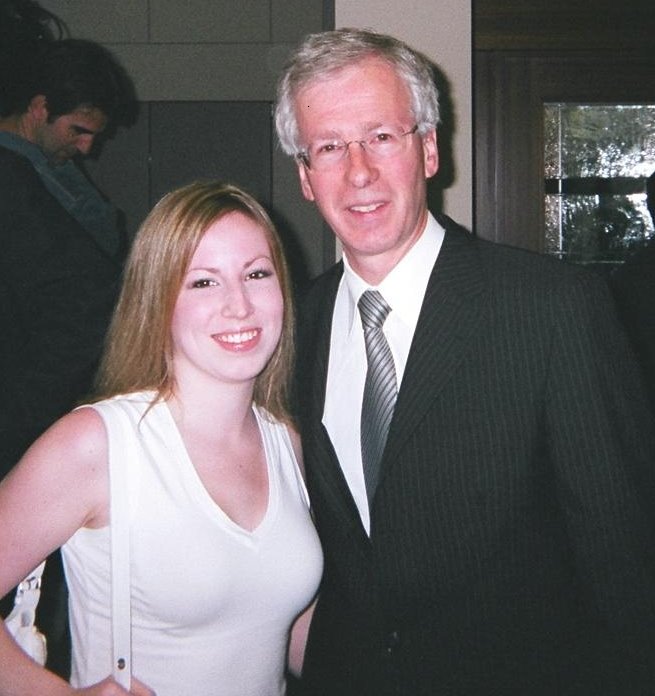
Here is a picture of me with Mr. Dion during his campaign in Vancouver.

On a wine related note, I bought a bottle of Le Petit Jaboulet the other day and opened it tonight to have with my pasta. It is about 90% Grenache (which is one of my favourite varietals) and had very strong notes of cherry. This wine is very smooth on the palate with a nice soft finish of light tannins.

Yummy. Oh, FYI it was only $13 a bottle.

Wednesday, November 29, 2006

Wine shopping


When shopping for wine, it does not have to be an intimidating experience. With all the different grape varietals, regions, and vintages (year the grapes were harvested), and different names for the same wines, no wonder wine shopping can be so hard.

I will do what I can to help make your shopping experience a little more enjoyable. Don't ever hesitate to ask me to come along if you're selecting wine for a dinner party, or just picking up a bottle to have around the house. I never turn down a wine shopping trip, I'm like a kid in a candy store! I might make you crazy though with how long I want to stay and look at everything.

Ok, so for those of us who enjoy a good bottle of French wine, this is the most confusing region to buy wine from, so let me make things a little easier by explaining some things. If you don't speak French (which I don't), it can be very difficult since all of their lables look VERY similar. Most wineries in France name their wines after the region that the grapes were grown in. For example, wines from the Bordeaux region of France are usually blends of up to five different grape varietals, most commonly though, Merlot, Cabernet Sauvignon, and Cabernet Franc. Wine from the Burgundy region of France are most commonly Pinot Noir.

Something else that can be kind of confusing that people often ask me is "What is the difference between Shiraz and Syrah?" The only difference between Shiraz and Syrah is the region the grape is grown. In France, they call it Syrah, in Australia and most other regions they call it Shiraz.

Also keep in mind that the price tag on a wine is not always an accurate indicator of how good the wine is. I've found some great wine's in and around the $12 range per bottle like Castano's Monastrell, which I've blogged about at the bottom of this page.
If you pick up a bottle of wine, it sounds interesting, and the price is right, buy it. What's the worst that'll happen, you won't like it and you won't buy it again. When you order food in a restaurant, you're not gauranteed to like what you ordered, but you take a risk because it sounds good. Read the label on the back of the bottle, it will usually have a description of the wine and often they'll include food pairing suggestions.

HAPPY WINE SHOPPING!

Cheers,
Andrea

Saturday, November 11, 2006

Pomegranate Wine

A friend from work, Aiden, asked me the other day if I knew of any wineries that produced Pomegranate wine, I told him I'd look into it because I hadn't heard of one.

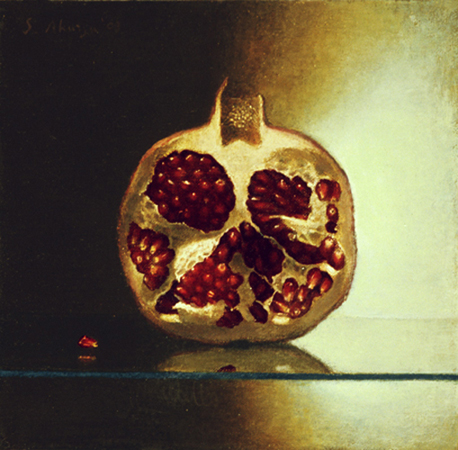
The word pomegranate is derived from French pome garnete and means "seeded apple." There are over 800 seeds in one pomegranate, they're tasty but so hard to eat with all those layers between the seeds.

Interestingly enough, there are a few places around the world that produce pomegranate wine. There is a winery in Armenia that produces a semi-sweet pomegranate wine, which I would really like to taste.

The history behind the pomegranate is also quite interesting. The fruit has been used throughout history as symbols of fertility, hope, and royalty. In Greek Mythology, they believe that Aphrodite, the goddess of love, planted it on the isle of Cyprus. Due to the number of seeds in each pomegranate the fruit was connected with procreation and abundance.

One article I found was particularly interesting shows the super-health benefits of pomegranates. The article says that 100 ml of pomegranate juice has 3 times the antioxidants of 100 ml of red wine or 100 ml. of green tea. Researchers say that if you eat pomegranates daily for a long period of time, the fruit's antioxidants may help to prevent hardening of the arteries. If only they weren't so hard to eat! I better get some pomegranate wine.

The wine is said to be similar in taste to something between a blush and a dessert wine.
There is a winery in Israel that produces pomegranate wine as well called the Rimon winery. Rimon is hebrew for pomegranate.

Monday, November 06, 2006

Pundit Blogger

According to this test I found on Breanne's blog.
You Are a Pundit Blogger!

Your blog is smart, insightful, and always a quality read.
Truly appreciated by many, surpassed by only a few

Sunday, November 05, 2006

Wine and Cheese

Here is a list of some wines pair very well (in my opinion) to some tasty cheeses.

First some basic guidelines when picking wines to go with your cheese:

-White wines generally pair better with soft cheeses and stronger flavours.
-Red wines are usually best with hard cheeses and milder flavours.
-Fruity, off dry and dessert wines pair with a wider range of cheeses.
-The stronger, and stinkier the cheese, the sweeter the wine should be.

It's generally better to pick white wines if you're having a wine and cheese party because a lot of cheeses leave a fatty taste on your palate that end up making red wines taste bland. White wines have more acidity that compliment this fatty aftertaste.

Some common pairings:

Brie and Camembert - Champagne or Sparkling wine

Mild Cheddar and Provolone - Chardonnay

Swiss and most German Cheeses - Gewurztraminer

Goat Cheese (Chevre) - Champagne, Gewurztraminer or Sauvignon Blanc

Gouda - Riesling

Sharp Cheddar - Shiraz

Blue Cheese - Cabernet Sauvignon

Stilton - Port

Feta - Beaujolais

Havarti - Red Bordeaux

Hope this helps anyone who is planning on hosting a wine and cheese party. Remember to taste the lighter bodied wines and milder cheeses first. Then move on to slightly stronger cheeses, and medium bodied wines, until you get to the strong stinky cheeses paired with full bodied, and dessert wines.

Bon Apetit

Friday, October 13, 2006

Okanagan Wine Tour September 2006

My dad and his lovely wife Sheryl were just recently married in the Okanagan (about 2 weeks ago). They were so generous as to fly Rob and I to B.C. from Saskatoon so we could be at the wedding. We stayed at this great little 9-hole golf resort called St. Andrews by the Lake in the Okanagan Falls. It was a gorgeous little spot! I golfed for the first time (poorly), during a night-golf tournament. I decided by about the second hole that instead of getting frustrated at my terrible game, I would drink beer along the way to make it a little bit more fun. So that is what I did.

The night golfing was only one night however, so we had some time to fill from Friday afternoon to Monday afternoon. The wedding was on Saturday, September 30th, right by the lake, and one of the greens. There was a very small group of us (only 9 people) but we had a LOT of fun! How? Well, the Thomas family knows how to party!

On Sunday, we drove in to Oliver which is only about 30 minutes from the Okanagan Falls, to do a little wine tour. Our first stop was Hawthorne Mountain Vineyards, the view from the winery was breathtaking. The giftshop/tasting room was very inviting and well laid out, the pours were quite generous (considering the tastings were free). We tasted quite a few of their wines but I was particularily excited about tasting their Meritage which is called "Ping." The wine had been built up for me when I worked at a VQA store in B.C. last summer so I had very high expectations. I think this wine has the potential to be very good in a few years but drunk young, the tannins were too harsh in my opinion (tannins are derived from the skins and stems of the grapes and cause that feeling of your lips sticking to your teeth). We also tried their Ehrenfelser Icewine which I thought was very good (this tasting was not free, icewines usually aren't), it had strong flavours of honey and apricots.

The next winery we went to was Wild Goose. Rob was not impressed that we all (Rob, Sheryl's daughter Meagan, her friend Tony, and I) got ID'd even though he has facial hair and wears a wedding band. I wasn't as upset about it because I'm used to getting ID'd, no biggie. We tasted some of their wines, one of which was their Bryant, which is a port style wine but they are not allowed to call it Port because it is not made in Portugal. This was very good, it was not too sweet and was quite plummy. Another one we tasted at Wild Goose was their Botrytis affected Riesling which I really enjoyed. Botrytis is another name for Noble Rot, which is a grey fungus that affects wine grapes. If the grapes are affected under moist conditions, the fungus can ruin entire crops of wine grapes. If the grapes are exposed when they are ripe, then are exposed to drier conditions, the grapes become raisin like and are literally hand picked one by one and can produce a fine, sweet, concentrated wine.
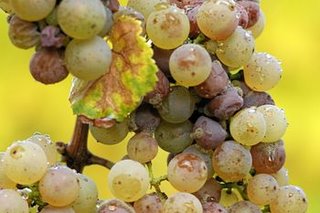
The Wild Goose Botrytis affected Riesling had strong flavours of honey and pineapple, I wasn't very fond of the aftertaste. It reminded me of the feeling you get in your mouth after eating a piece of pineapple. No one else thought it did this, so maybe I'm just crazy;)

The next winery we went to was directly across the street from Wild Goose, called Tangled Vines. This winery had something I would really like to support. They give proceeds of their rosé wine, called Tickled Pink, to Breast Cancer Research. Unfortunately I wasn't very fond of this wine. I really like the idea behind the donation, but it just wasn't very good wine in my opinion. This winery only produces white wines. We tasted their Pinot Blanc, Gewurztraminer, Riesling, and the Tickled Pink rosé. The gewurztraminer didn't have any spice or lychee taste at all. The Riesling was very bland with no tropical fruit flavours, so I was a little dissapointed. On the other hand, the tasting shop was the most inviting of all of the wineries we went to over the weekend. There were three very personable young guys pouring the wines and some cool art on the walls. It has a very young and modern feel to it; too bad the wines are lacking :(

We went to one right beside Wild Goose called Stag's Hollow where we started off tasting a couple of Chardonnay's. One stored in oak casks, and one stored in stainless steel casks. I tasted both and found the oaked chardonnay to have HUGE aromas of oak and vanilla, which I love, but then was very dissapointed at the flavours when I tasted it. It was very weak on the palate. Next we tasted their Pinot Noir which I found to be quite weak as well, it didn't have any earth or cherry flavours and was very bland. Their Merlot however was quite good, it was very chocolatey on the finish. I found their Meritage to be too tannic and too high in alcohol content.

Next we went to the Jackson Triggs winery which, as I expected, was very cold and large. Jackson Triggs is one of the largest wineries in Canada so it is hard for them to keep it warm and cozy. Their tasting shop was very large, with all their wine displayed nicely along the walls of the dim-lit tasting room. I've tasted a few of their wines before but tasted them again since we were there. We tasted their Grand Reserve Sauvignon Blanc, which was citrusy and grassy as a Sauv Blanc should be, next was their Viognier (pronouced: Vee-ohn-yay) which I really like, its very full bodied like a chardonnay but not oaky, or buttery like a chard. It has notes of tropical fruit and is very strong. Viognier is one of my favourite white wines. We then tasted their Shiraz, which is very spicy with berry flavours. Their Grand Reserve Meritage which I wasn't super impressed with, is too tannic, and their Cabernet Sauvignon is not that fabulous either.

The next part of the tour was kind of interesting. We were in the Nk'Mip(pronounced: Ink-ah-meep) area, so we thought "We must be close to the Nk'Mip winery!" we went in search of it and saw signs that said "Nk'Mip vineyards", so we followed the signs that led us to something that looked like it was fresh out of an Alfred Hitchcock film in the middle of the sticks with a bunch of semi-trucks parked and an old abandoned looking barn. We cruise up in my uncles BMW SUV and roll down the window to ask some sketchy looking guys wearing mack jackets if this was where the winery was. They looked at us like we all had three heads each and then told us that the VINEYARD was there, but the WINERY was in Osoyoos. We weren't even close to Osoyoos, so we rolled up the windows and drove back down the creepy windy road to civilization.

That was the end of our wine tasting for that day. Don't worry though, we continued it a couple of days later on our way to the Kelowna airport from the Okanagan Falls. We first stopped at Deep Creek & Hainle Vineyards in Peachland. A cool thing about this winery is that it plays a little part in wine history. Hainle is the birthplace of Icewines in North America which, as far as I know was an accidental discovery. I really like a lot of their wines and especially like the fact that their wines are organic, from the vineyards to the bottle, they do not spray their vines with pesticides or add a ton of sulphites. Organic wines are good for people that are prone to getting headaches from drinking wine. Sulphites make this worse, so although organic wines still have some sulphites, not nearly the quantities as other wines that are not organic.

I have a couple of favourites from this winery and have purchased them in Vancouver at a couple of different VQA wine stores. One of my favourites is their Gewurztraminer, which is quite spicy with strong flavours of lychee (my fav'). Another is their Deep Creek Zweigelt (pronounced: tzvi-gelt) which is originally a grape varietal from Austria and Hungary (the winemaker is Austrian) but has been brought to B.C. Deep Creek makes a Zweigelt that has soft flavours of plum, chocolate, and pepper. It's very good and I recommend you try it. We tasted a whole bunch of other wines here but I won't list them all, just my favourites, they're all quite good in my opinion.

Next stop was Mt. Boucherie. We tasted 4 wines here, their Semillon (pronounced: Sem-ee-yon), Ehrenfelser (my fav'), Blaufrankisch (pronounced: Blo-fronk-ish), and their Merlot. The Ehrenfelser was slightly sweet, with flavours of peach, and citrus. Rob really liked the Blaufrankisch, which tasted to me like tobacco and dirt. My sweetie likes his earthy, hearty wines! Those wines are NOT for me but hey, to each his own!

Ok, only two more wineries to tell you about!

We stopped in at the Quails' Gate Estate Winery to taste a few of their wines. We tasted their Chasselas-Pinot Blanc(pronounced: Chass-a-la) which is a great summer wine, its not very complex, but is very refreshing nonetheless with flavours of melon fruits and citrus. Their Old Vines Foch was Rob's favourite, from this winery. It is very fullbodied with a strong earthy(a nice way of saying "It tastes like dirt") and coffee taste. I was not a fan of this wine, but my hubby and I always manage to come to a compromise when it comes to buying wine.

The next stop was the MOTHER of all wineries in Canada, Mission Hill. The winery is HUGE and very elaborate. The proprietor, Anthony Von Mandl is a very passionate man with a $3 million bell tower, and pelican statues, and big empty rooms with beautiful tapestries on the walls. The whole place is beautiful, with a gorgeous view and amazing architecture. I guess that's what happens when a really rich and passionate person designs a winery and vineyard. We didn't taste any of the wines here because Rob and I have both tasted pretty much everything in their portfolio. When we lived in White Rock, B.C. I worked for a fine wine boutique called Mark Anthony's, Purveyor of Fine Wines Worldwide. Mark Anthony's is owned by Mission Hill, so even though they had a HUGE selection of import wines from all over the world, the only Canadian wines sold in the store were Mission Hill products. We did a LOT of in-store tastings so I got to taste all of them(I know...it was a REALLY tough job, but somebody had to do it).
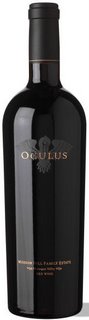
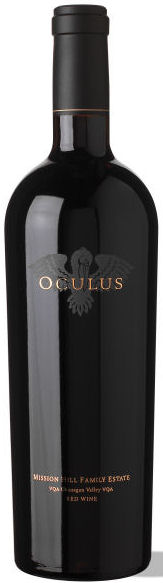
If you ever get the chance to taste Mission Hill's Oculus, I strongly recommend you do. It is one of my favourite wines, which kind of sucks because it is quite expensive and hard to get.

So that was the end of our wonderful long weekend in the Okanagan with my dad and my new Step-mom(I'm sure she LOVES that new title! lol) We had a great time and are really looking forward to going back to BC for the Christmas holidays. We're hoping that our dear friends Dan and Kathy will organize another wine tasting party at Dan's house while we're home. ;)

Cheers!
Andrea

Sunday, October 08, 2006

Apéritifs and Digestifs

I'm learning more and more about wine and fortified wines in my new job at Calories. Calories is a little french bistro in Saskatoon, which I consider to be the best restaurant in Saskatoon. I'm not just saying that because I work there. The food is amazing and truly a work of art, the wine list is impressive and ever growing. I'm hoping to start working the evening/dinner shifts as it is much more formal, not only is the money a LOT better than during the lunch shifts, but I actually get to put my wine knowledge to use.

The drink menu I'm not super knowledgeable on is the Apéritifs and Digestifs. So I've done some studying and am going to share my new found knowledge with you.


An apéritif is an alcoholic drink that you have before dinner to wet your appetite. It's supposed to make your meal taste better.

"The word is French and is derived from the Latin verb "aperire", which means to open. This etymology is fitting since an apéritif opens the meal." (Wikipedia)

Some common drinks served as apéritifs which are on the menu at Calories are:

Kir, which is a créme de cassis(black currant liquor) with white wine.
Kir Royale, is the same drink topped up with Champagne instead of white wine.

A Manhattan(which I ordered once in a restaurant in Vancouver and the bartender had never made one before) can be ordered a few different ways, the ingredients are Whiskey, Vermouth, and Bitters with a maraschino cherry in the glass. They can be ordered sweet, or dry depending on the ratio of Whiskey to Vermouth.

Now on to Scotch (My husband is a big fan of scotch, me not as much)

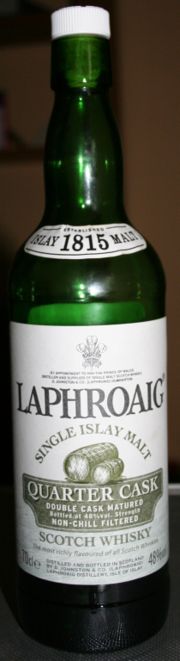
Laphroaig 10 year old(pronounced: LaFROYG) is said to mean "the beautiful hollow by the broad bay"
Laphroaig is known to be an aquired taste, it has a very strong peaty and smoky taste.
The distillery is on the island of Islay off the West Coast of Scotland.

Lagavulin 16 year old is also on the island of Islay in Scotland
It has strong flavours of iodine as well as peat and is not recommended for new scotch drinkers. It's one of those scotches that you either love or you hate.
In the 19th century, the owners of the Lagavulin distillery tried to sue Laphroaig because they were supposedly stealing their style of scotch making.
(These truly are the days of our lives....)

Glenmorangie is pronounced GlenMORanjee, with emphasis on the MOR, like orangey. A lot of people pronounce it GlenmorANGee, but this is incorrect. The scotch is first aged in American bourbon casks, then transfers the scotch to casks which have previously been used to mature wines using different wine casks to create different flavour characters in the scotch.
Calories carries the Port Wood Finish, which has aromas of butterscotch and dark chocolate, with a smooth feel on the palate. This is best enjoyed after a meal as a digestif.

Drambuie, meaning "The drink that satisfies"
It is produced in the Isle of Skye in Scotland and was said to be a gift from Prince Charles Edward Stuart to Captain John Mackinnon. The Mackinnon family has produced Drambuie since.
Drambuie has flavours of honey and herbs and is golden yellow in colour. It is made with Scotch whiskey liqueur, honey, and a blend of herbs and spices. It can be consumed on ice, straight up, or in a cocktail.


Ricard has an interesting story. When Absinthe was banned in France, the two major producers of absinthe, Pernod and Ricard, joined forces to make the same drink without the wormwood(which was the ingredient in absinthe that made you "trip out"). They made it with more star anise giving it the liquorice flavour(which I don't like..Blech!)
It's usually dilluted with water changing it from a yellow colour to a milky colour.
You can also mix it with flavoured syrups to make different cocktails. Some popular mixes are;
Perroquet(parrot) mixed with Green Mint Syrup
Tomate(tomato) mixed with Grenadine
Mauresque(moorish) mixed with Orgeat Syrup(almond flavour)

Pineau de Charentes is made from a blend of unfermented grape must and cognac, it was said to be an accidental discovery. A winemaker in Charente accidentally added grape must to a barrel which he thought was empty but it actually contained some brandy. The blend was put into the cellars for fermentation and a few years later when they opened the barrel to bottle the wine, the winemaker discovered the drink that is now associated with the region of Charente in France.
The drink is sweet, but also contains high levels of alcohol and acidity.

On to Sherry:

Amontillado is a sherry wine, which to me, was made famous by Edgar Allan Poe's "The Cask of Amontillado" which is a great horror story about revenge and murder.
the drink however, started as fino which is a light and very dry sherry, but due to oxidization during fermentation is reclassified as an amontillado sherry which is slightly darker and sweeter.

Oloroso is a darker and richer sherry than amontillado. It is aged much longer and goes through an oxidizing aging process for a much longer period than fino or amontillado. It can be left to age for many decades in American and French oak casks.
Oloroso is said to be off-dry(slightly sweet) with hints of toffee, almond and fig. Depending on the winemaker, it can also have aromas of orange peel, and raisins.

Campari is alcohol and water infused with bitter herbs, aromatic plants, and fruit. It was originally made in Italy and the recipe contains over 60 ingredients that is still kept a secret to this day. The colour of Campari is from cochineal dye(derived from the cochineal insect which is crimson red and very expensive, mainly used in food colouring and cosmetics).
Campari is usually served with soda water, but can also be served with orange juice, or straight up on the rocks.

Pimms No. 1 Cup is a gin based digestif that no one really knows exactly what is in it. It is a dark colour with a reddish tint, and has flavours of spice, and citrus fruits. It was originally made in the 1840s by James Pimm as an aid to digestion.
The most popular cocktail using Pimms is "The Pimms Cup" which is made with one part Pimms No.1 to three parts lemonade or lemon soda and garnished with a slice of cucumber.

Calvados is an apple brandy that can be served as both an apéritif and a digestif. A well made calvados should have balanced flavours of brandy and apple.

Armagnac Sempe is basically the same thing as Cognac but it doesn't go through a double distillation like Cognac(Cognac and Armagnac are both a type of brandy). A legend says that King Henry IV of France had Armagnac and garlic put on his lips when he was born by his grandfather to give him strenth and wisdom for the rest of his life.
Rémy Martin XO is another type of Cognac brandy. It is one of the two most recognizable brands of cognac today.

Chambord is a liqueur made from raspberries, vanilla, honey, and cognac. It is made in the Loire Valley in France, and is the main ingredient in the drink Sex on The Beach.

Poire William is a clear pear brandy from Switzerland. Some bottles of Poire William have a whole pear inside. They could do this by placing a bottle over a budding fruit and allowing it to grow inside. Neat eh?
It can have strong aromas and be dissapointingly mild on the tastebuds.

Grappa is a grape-based spirit made from the leftover skins, stems, and seeds from winemaking. It is very high in alcohol content and can be added to espresso to make caff
é corretto. Grappa was originally made in Italy.

That about wraps up this post. Wow! I didn't intend for it to be this long, I guess I got a little carried away! Oops. Well, I hope you all learned something here, at least some useless history that you can pass onto your friends next time you're enjoying a glass of Lagavulin, or Armagnac Sempe.

Cheers!
Andrea

Friday, August 11, 2006

The Wedding

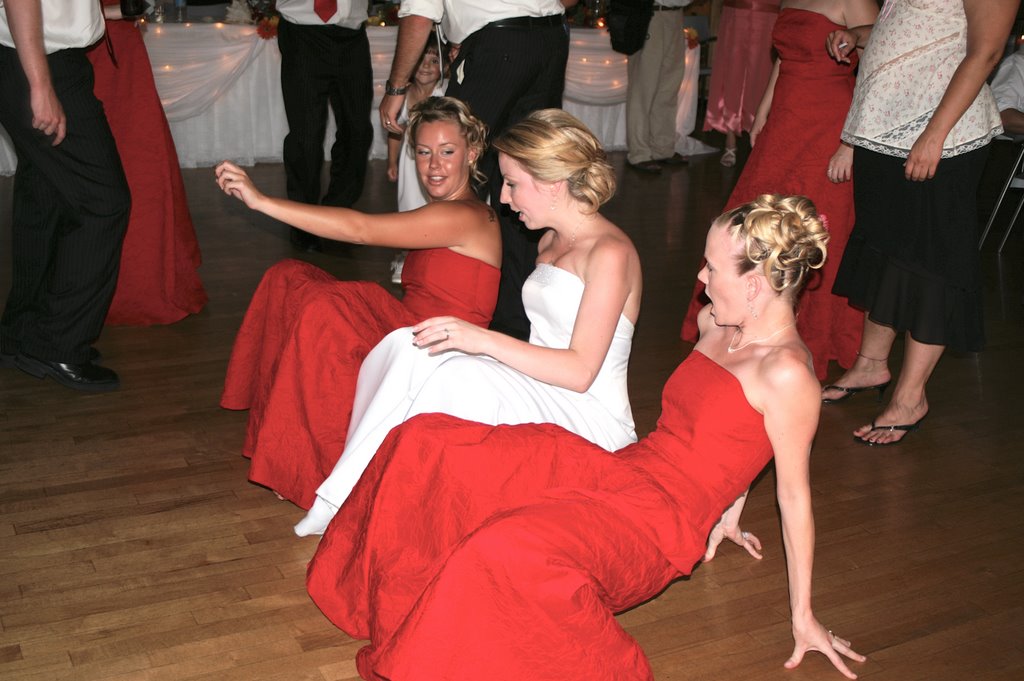
It was absolutely fabulous! By far the best day of my life. Everything was so perfect, from the guests, speeches, music, dancing, and wine to the smallest details. All the guest had a great time, some got a little too tipsy but that's to be expected. All in all everyone had a blast. We danced all night longto everything from Louis Armstrong to Sir-Mix-Alot(baby got back). The wine went over well, and was very affordable. It went well with the food, and the labels matched our wedding colours ;). It was the Okanagan Vineyards Select White(just a blend of various white varietals) and the Okanagan Vineyards Pinot Noir(which went well with the salmon). We ended up with more red left over than white, but that was partly due to the fact that it was the hottest day of the year and people wanted cold drinks. It was a stinkin' 35 Celsius! We were all pretty sweaty but we danced our butts off anyway. We got our pro-shots back from the photographers and we were SO happy with them. They did such an amazing job of capturing the fun and emotion of the whole day, and they were quite reasonably priced compared to some of the other photographers we had checked out. I was very impressed with almost every person or business that we had to deal with throughout the planning process. Here are some photos for you to enjoy:)

Tuesday, July 04, 2006

Summer and Wine

The days are longer, the sky is blue, the sun is up every day....Summer is finally here! I just hope it sticks around long enough for the wedding. I've been spending much of my time down at English Bay, sitting on the sand, swimming in the ocean, enjoying the sunshine (wearing sunscreen of course) and having a great summer. The wedding is in two weeks, some of my friends are discovering new love; there's magic in the air. I think I might write this summer up as being the best summer ever.

What goes great with these wonderful hot summer days? I'll tell you, a nice cool glass of white wine and good company. Sitting on the balcony of our HOT HOT place eating salmon and a delicious salad I made of spinach, pear, blue cheese, green onion with a balsamic/olive oil dressing....Mmm, Mmm, Mmmm.

I picked up a bottle of Lindemans Bin 85 Pinot Grigio on my way home today. It's a little too acidic on the finish, but I thought I'd give it a try. It's a pretty good value wine for the summer. It's crisp and refreshing with notes of peach, honey and lemon.

Wednesday, June 14, 2006

Corked wine...

I made some butter chicken tonight with rice for Rob and I. We opened a bottle of Deinhard Riesling(which I've had before and liked). I poured a glass for us both and as soon as I took a whiff I could tell the bottle was corked. So I poured the wine back into the bottle and will bring it back to the liquor store tomorrow. Any reputable wine or liquor store will take back a bad bottle of wine.

How to tell if a wine is 'corked'

When you pop the cork, if its a ruined bottle, it will often look kind of slimy and have some green tinge to it; sort of mouldy looking.
When you pour the wine and smell it, it'll have a wet newspaper smell to it.
Next if you get to the tasting part of it, sometimes in a white wine, it will have a slight effervescence to it and if it is a still wine it should not have any fizzy characters so the wine is probably bad.

It always sucks to get a bad bottle of wine. Especially when you only picked up one bottle, and you were really looking forward to it. You get home hoping to relax with a nice glass of wine, or to enjoy it with your dinner and then you get a big whiff of something nasty in your glass. Don't worry though, its not as rare as you'd think. Supposedly 1 in 10 bottles of wine is ruined by cork taint. So if you get a wine that you've had before and you thought you liked but its bad this time. Don't worry you can always take it back and exchange it for a new one, or something else because chances are, its corked.

The liquor or wine stores should never challenge you on this. If you say its corked, its corked and they should give you your money back. If they don't, ask to speak to a manager.

Sunday, May 07, 2006

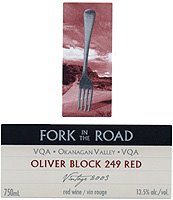
Fork In the Road


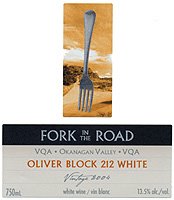
Oliver Block White: This blended white consists of mainly Chardonnay, but also has some Pinot Gris, Semillon, and a little Viognier. The chardonnay sort of bites you with some nice oak. To some the oak is a little too much, but I'm developing a taste for oaky wines these days so I liked it.

Oliver Block Red: The blend in this wine is mostly Merlot, but also has some Syrah, as well as some Cabernet Sauvignon. It had a lot of berry fruit on the nose, but on the palette was too tannic for my liking.

Both of these wines are very young and would benefit from a little more time in the bottle. The tannins in the red might soften up a bit over time.

Rob and I are back in Vancouver and extremely happy to be here. We miss our wonderful friends in Saskatchewan and hope they get down here this summer. The wedding is creeping up slowly and we've just selected the wines for the wedding. I will save that for another post.

Saturday, April 08, 2006

Francis Ford Coppola Rosso


I cannot wait to buy a bottle of this when I get back to BC! We don't have it here in Saskatchewan unfortunately. It is my favourite $20 bottle of wine, but its been so long since I have tasted it so I can't describe it to you. I'll try anyway, cuz I think I can sum it up on one word:

Silk.

Its a blended red wine made of Cabernet Sauvignon, Zinfandel, and Syrah. I remember it being very big and fruity, finishing with vanilla or mocha.

If you get the chance to try this wine, I recommend it.

Yummy.